Neighborhood Watch for Wildfire
Cabernet Watch | Fire Wise Series
Neighborhood Watch for Wildfire
A home can comply with the building code that applied when it was built and still have features that are vulnerable to wildfire. That does not mean the home was built incorrectly. It means wildfire science, building products and recommended protective practices continue to improve.
This is where Fire Wise approach can serve our neighborhood much like Neighborhood Watch.
Neighborhood Watch teaches residents to recognize conditions that may invite crime, remain observant, share information and take reasonable preventive action. Fire Wise applies the same community-minded approach to wildfire. We learn what to look for, monitor conditions around our homes, share practical information and correct vulnerabilities before wind-driven embers or flames arrive.
Vigilance is the starting point. Action is what turns vigilance into protection.
WHAT WE LEARNED BY LOOKING AT ONE HOME
As an exercise, we examined several exterior features of a Cabernet Highlands home built in 2006. At first glance, the home appears well suited to wildfire conditions.
- Concrete tile roof
- Concrete and hardscape near home
- Low-profile vents integrated into roof
- Stucco exterior walls
- Screened gable louvers
These are meaningful strengths. Concrete tile and stucco are non-combustible materials, while hardscape immediately around a structure can help interrupt pathways through which fire can reach the home. But the exercise demonstrated why a closer look is valuable.
A ROOF VENT MAY LOOK PROTECTED WITHOUT BEING EMBER-RESISTANT
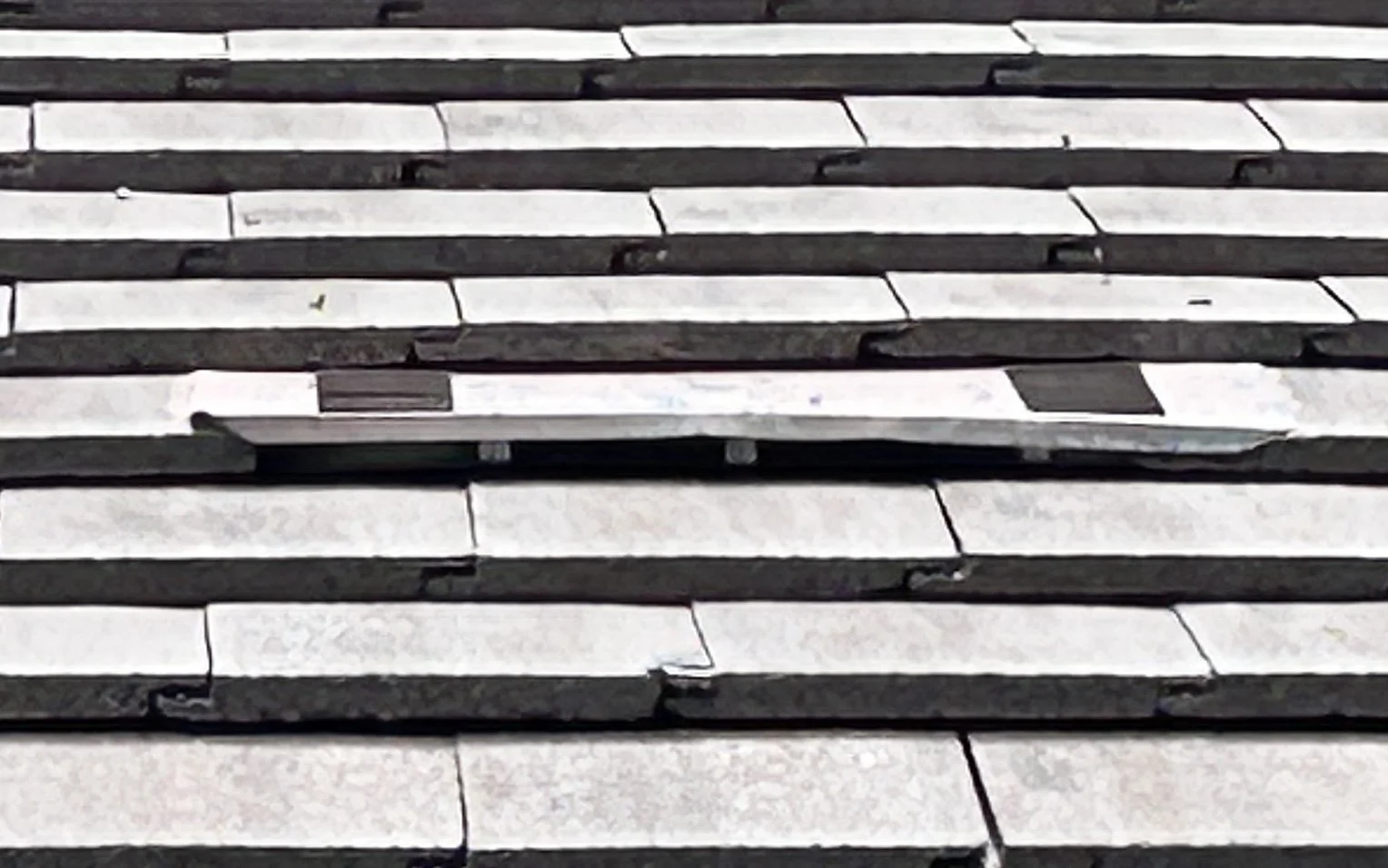
The low-profile roof vent lies flat within the concrete tiles and uses a hood or deflector. This configuration may help resist wind-driven rain and could be part of a tested flame-and-ember-resistant design. However, no protective screen or internal mechanism is visible from the ground.
Appearance alone cannot establish whether a roof vent is ember-resistant. Some approved products use internal baffles or stainless-steel filament that cannot be seen externally. Other vents may have a similar-looking weather deflector but remain open to small embers.
The next correct step is not to climb onto the tile roof or add an improvised screen. It is to identify the manufacturer and model, examine the attic side safely, or have a qualified roofing professional determine whether the vent is a listed flame-and-ember-resistant product. Any modification must preserve the roof’s weather protection and the attic’s required ventilation.
A GABLE LOUVER SHOWS WHAT CLOSER OBSERVATION CAN REVEAL
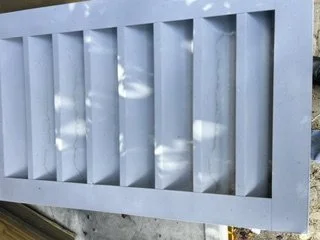
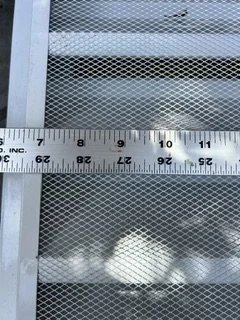
The gable louver appears to contain fine screening. If the openings are no larger than one-eighth inch, the screen is noncombustible metal, and it is securely attached without gaps around the perimeter, the assembly is generally consistent with basic recommendations for reducing ember entry.
The important lesson is that “screened” is not a complete description. Material, opening size, condition and attachment all matter.
THE LESS-OBVIOUS VULNERABILITY: BIRD-BLOCK VENTS
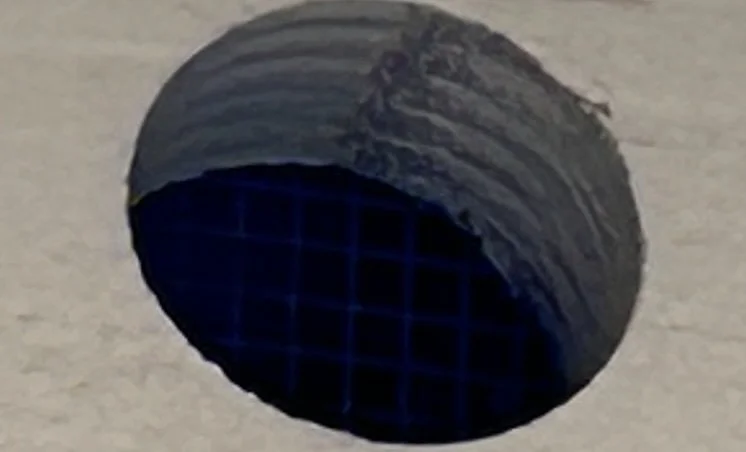
The most important discovery was under the eaves. The home has 36 small bird-block or soffit ventilation openings. Those openings appear to contain screening with openings approximately one-quarter inch across. That screen may perform its original purpose by keeping birds and rodents out of the attic, but openings of that size may still allow smaller wind-driven embers to enter.
Current wildfire guidance generally recommends flame-and-ember-resistant vents or corrosion-resistant, noncombustible metal screening with openings no larger than one-eighth inch. The difference between one-quarter inch and one-eighth inch may appear small, but an ember storm can expose a house to thousands of burning particles. A vulnerability repeated 36 times deserves attention.
A suitable improvement might involve installing fitted, ember-resistant metal vents or adding properly secured one-sixteenth- to one-eighth-inch stainless-steel mesh. The work should eliminate gaps around the perimeter and address rough wooden edges where embers and debris could collect.
Do not simply seal attic vents
The bird-block openings may provide essential intake air. Restricting or closing them without evaluating the complete ventilation system could create excessive heat or moisture. A qualified contractor should calculate the net-free ventilation area and preserve the necessary balance between intake and exhaust.
CODE COMPLIANCE AND WILDEFIRE RESILIANCE ARE DIFFERENT QUESTIONS
The home in this exercise may have met every applicable building requirement when it was constructed. The presence of one-quarter-inch bird screening is not, by itself, evidence of a code violation.
Building codes establish minimum requirements at a particular point in time. Wildfire resilience asks an additional question: What practical improvements can we make today to increase the home’s ability to survive an ember storm or nearby fire?
A wildfire assessment should not be presented as criticism of a homeowner, builder or past building official. It is a forward-looking process of observing, maintaining, improving and reassessing.
WORKING TOWARD A COMMUNITY FIRE WISE PROGRAM
Cabernet Highlands is not currently a formally recognized Fire Wise community. This series is intended to help residents understand wildfire risk, consider practical neighborhood improvements and explore the steps involved in creating a community Fire Wise program. Developing such a program would require community participation, a wildfire-risk assessment, an action plan, documented mitigation activity and continuing annual work.
Recognition would show that residents have created an organized process for reducing wildfire risk. It may also help residents discuss mitigation with insurance companies. Nevada has established a voluntary pathway through which insurers may offer incentives for property-level improvements and community Fire Wise recognition.
However, Fire Wise recognition does not guarantee an insurance discount, policy renewal or acceptance by a particular insurer. Those decisions remain carrier-specific. Reducing the chance of property loss and improving our neighborhood’s resilience should remain the principal reasons for participating.
VIGILANCE IS A NEIGHBORHOOD PRACTICE
Wildfire does not recognize property lines. Embers can travel long distances, and one burning structure or combustible fence can expose neighboring homes to intense heat and flame. That is why Fire Wise works best as a neighborhood practice rather than a collection of isolated household projects.
Residents can help one another by learning to recognize:
- Debris accumulating on roofs or in gutters
- Combustible materials within five feet of a home
- Damaged, plastic or oversized vent screening
- Gaps beneath roof tiles or around openings
- Wood fences attached directly to structures
- Sheds and other combustible structures near homes
- Dead vegetation beneath decks or against walls
- Access conditions that could hinder emergency response
The purpose is not to inspect or criticize our neighbors. It is to build shared awareness and make voluntary improvements that reduce risk throughout Cabernet Highlands.
The lesson from this exercise is simple: a home can have many favorable features and still contain a less-visible vulnerability. We can begin by learning, documenting what we find, sharing reliable information and identifying reasonable priorities.
Fire Wise is Neighborhood Watch for wildfire: vigilance that leads to action, and action that helps protect the entire community.
Sources & Disclaimer: This article draws on publicly available wildfire-resilience guidance, including the resources listed below. It is provided for general education and community awareness and is not a building inspection, code determination, insurance commitment or substitute for advice from a qualified professional.
HOMEOWNER RESOURCES
For science-based guidance, see the IBHS Wildfire Prepared Home program and the University of Nevada, Reno Extension’s Living With Fire program. This article is educational and is not a building inspection, code determination, insurance commitment or substitute for advice from a qualified roofing or ventilation professional.